Key Takeaways
- Schema markup clarifies site content for search engines and machines.
- It enables eligibility for Google rich results, not direct AI-generated citations.
- Adding schema does not guarantee higher visibility in AI Overviews or ChatGPT.
- Prioritize sound technical SEO and strong, visible content over relying on schema for AI search.
- An AI Search Visibility Audit can reveal true opportunities beyond structured data tweaks.
Introduction
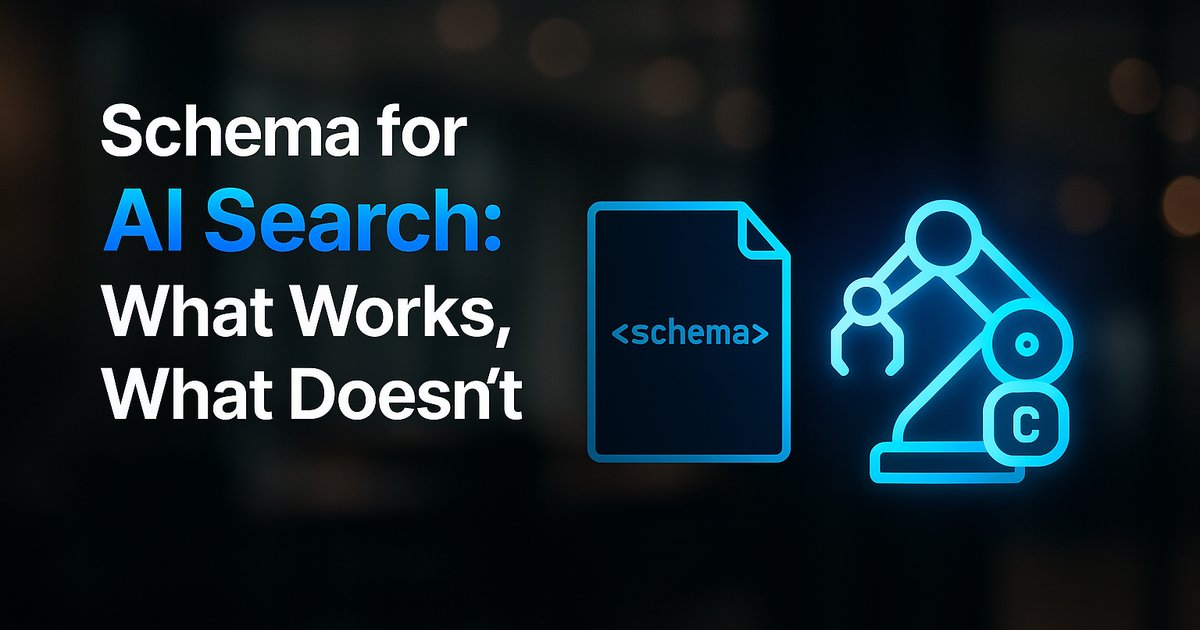
Schema markup plays a key role in helping search engines and AI tools understand the content and relationships on your site. It improves machine readability and supports eligibility for rich search results, but it is not a magic lever for getting cited or included in AI-generated answers. Adding schema markup does not guarantee that your website will be chosen by Google’s AI Overviews or tools like ChatGPT—in fact, studies show no direct uplift from adding schema alone.
For B2B businesses seeking to boost their site’s AI search visibility, it’s essential to separate evidence from wishful thinking. This post walks through exactly what schema markup can and cannot do for your AI search ambitions, with practical next steps for building true visibility.
What Schema Markup Really Does for AI Search
At its core, schema markup is structured data embedded in your website’s code to label entities, content types, dates, and relationships in a machine-friendly way. Search engines like Google use schema to parse your site with greater accuracy and make you eligible for special features like rich snippets, articles, and product cards.
For AI search tools, schema helps clarify who you are, what your page covers, and how it fits into broader topic graphs. This improves extraction and credibility for systems that analyze web content programmatically.
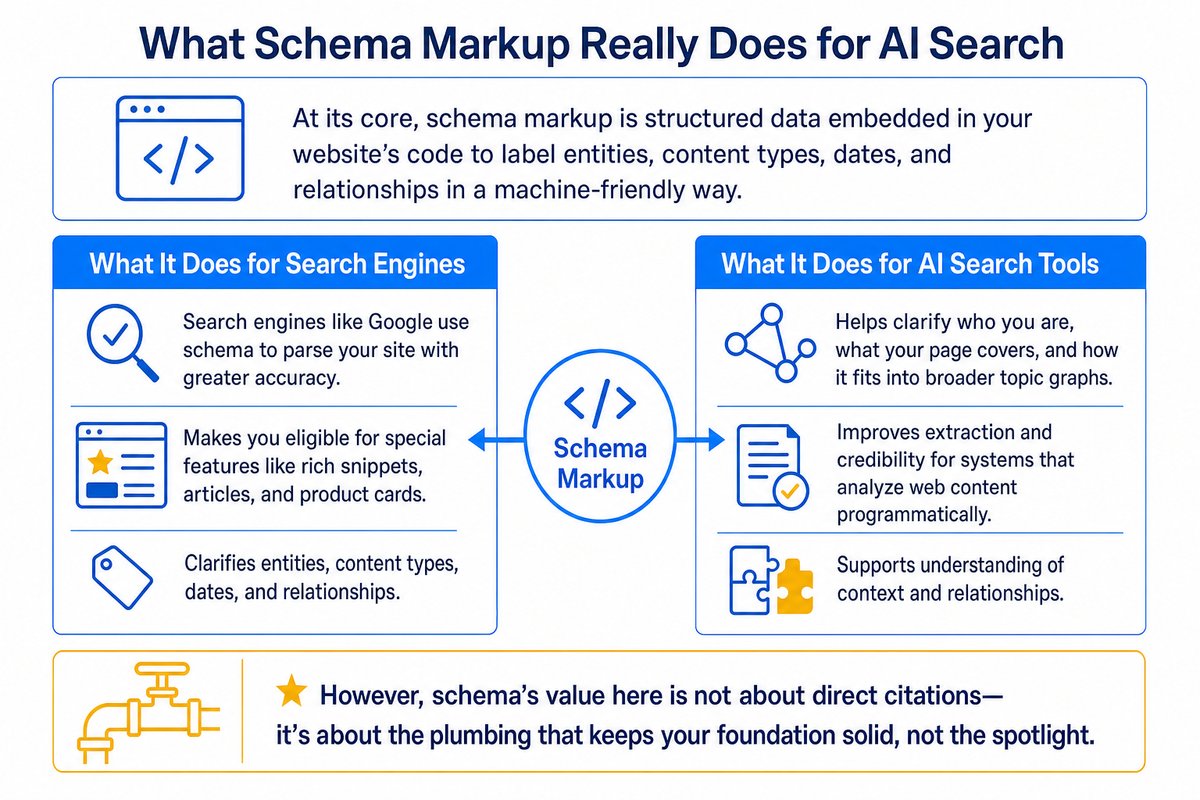
However, schema’s value here is not about direct citations—it’s about the plumbing that keeps your foundation solid, not the spotlight.
Want help implementing this in your business?
Book a CallWhat Schema Markup Cannot Guarantee
Despite what some marketers promise, there is no special schema tag or format that makes your business the preferred source in AI Overviews, Google AI Mode, or ChatGPT answers. In May 2026, Google’s own guides made it crystal clear: adding structured data is important for SEO hygiene, but it is neither weighed nor required for AI features. Studies like the large Ahrefs experiment (over 1,800 pages) even found a small decrease in AI citation rates after schema was added.
AI-driven citation choices are based mostly on the relevance and authority of your visible content, not schema code. Many pages cited by AI contain no structured data at all. Schema markup is not a ranking or citation signal for AI search.
Where Schema Markup Is Absolutely Worthwhile
Schema is still vital for SEO fundamentals. It lets you cleanly communicate critical details like your business name, services, and articles directly to machines. Without it, you may miss out on rich search features—FAQ displays, organization cards, breadcrumbs—where Google explicitly lists eligibility requirements.
For service businesses, useful types include Organization, LocalBusiness, Service, and Article schema. These support local SEO, brand visibility, and product clarity.
Read more in our AI Search Optimization guide or explore SEO Guides for WordPress and Growing Businesses for hands-on examples.
Common Myths and Missteps with Schema for AI Search
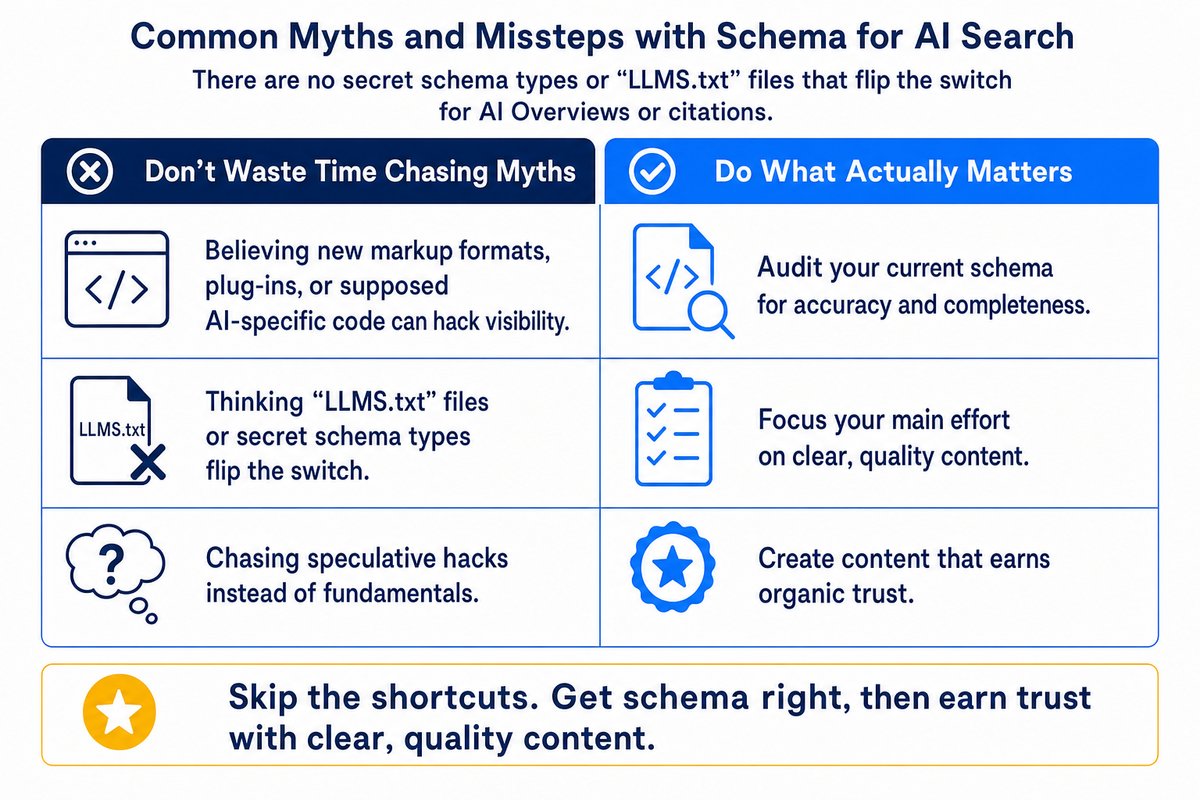
It’s tempting to believe that new markup formats, plug-ins, or supposed AI-specific code can hack visibility. But official sources and independent tests are clear: there are no secret schema types or “LLMS.txt” files that flip the switch for AI Overviews or citations.
Don’t waste time chasing speculative hacks. Instead, audit your current schema for accuracy and completeness, and focus your main effort on clear, quality content that earns organic trust.
Checklist: Implementing and Validating Schema for Search Success
To get the actual value schema offers, ensure your markup is complete, up to date, and error-free. Use the following checklist:
- Apply core types: Organization, LocalBusiness, Product, Article, FAQ, BreadcrumbList where relevant.
- Use Google’s Rich Results Test or Schema.org Validator to check your implementation.
- Make sure markup reflects the actual visible content, especially for business details and service descriptions.
- Remove or correct any legacy or plugin-generated schema that’s inaccurate.
A regular schema audit is part of the technical SEO process we provide as part of an AI Search Visibility Audit or broader digital strategy engagements.
Technical SEO & Content Foundations Matter More
The hard truth: schema is only the supporting actor in your AI search strategy. Search engines and AI tools pick sources based on crawlable, indexable, authoritative content—not just hidden code. Focus first on technical SEO: make your site fast, mobile-friendly, and accessible. Surface unique, trustworthy content that directly answers client questions and matches your target keywords.
Want to see if your business is ready for the next level? Read Is Your Business Ready for AI Integration? for more guidance on optimizing what truly matters.
Conclusion
Schema markup is a cornerstone of technical SEO and machine readability, but it will not guarantee higher visibility or increased citations in AI search features. Prioritize clear, high-authority content and reliable SEO basics for genuine improvement—these carry the most weight with both traditional and AI-powered search engines.
If you want a complete picture of where your site stands in the evolving world of AI search, request an AI Search Visibility Audit from TitanTech360. We’ll help you move beyond checklists to strategies that actually drive results.
Frequently Asked Questions
Does schema markup help my website appear more in ChatGPT or Google AI answers?
No, adding schema markup does not directly increase your chances of being cited in generative AI answers. Studies and official Google documentation both confirm that schema is not a citation lever for AI-powered features like Google AI Overviews or ChatGPT.
Which schema types matter most for B2B service businesses?
Focus on Organization, LocalBusiness, Article, and Service schema. These types help communicate your business’s key details and make you eligible for valuable rich results. The choice depends on your services and page content.
Should I use experimental markup like LLMS.txt or 'AI-specific' plugins?
No—Google and recent independent studies confirm that such files and special markup neither help nor hurt AI search visibility. They are not officially used by search engines and can safely be ignored for now.
How often should I audit my schema markup?
Auditing your schema should be part of your ongoing technical SEO, ideally every few months or after any significant site updates. Use official tools to check for errors and ensure your markup matches what’s visible on your pages.
What factors help AI search engines choose my site for citations?
AI search engines prioritize clear, relevant, and authoritative visible content that answers user questions directly. Technical SEO, page structure, and user trust signal matter much more than schema markup alone.
Ready to Put This Into Practice?
Let's talk about where your business stands today and what to fix first.
Book a Call