Key Takeaways
- AI search changes your goal from earning clicks to earning AI mentions.
- Traditional SEO remains essential, but GEO focuses on brand visibility in AI-generated answers.
- Metrics shift toward AI citations and zero-click visibility.
- Third-party and off-site mentions grow in importance for AI search results.
- Traffic from AI search tends to be smaller but converts at higher rates.
Introduction
When your business considers AI search on top of traditional SEO, your mission changes: it’s not just about ranking high in Google or Bing anymore. Now, you must also earn visibility inside AI-generated answers—where large language models like ChatGPT and Google’s AI Overviews summarize solutions for users, often without sending traffic to your site. Businesses now need both SEO (ranking for clicks) and GEO (being mentioned or cited in AI answers), or risk losing out on high-quality, high-converting attention.
SEO vs GEO: What’s Actually Different?
SEO optimizes your website content to win clicks from traditional search. GEO (Generative Engine Optimization) aims for your brand or content to be cited within AI-generated answers. Success in SEO means rankings and organic traffic; success in GEO means being referenced, quoted, or included in the summary—often without the user visiting your site first.
Both approaches demand credible, structured, high-quality content. But GEO adds the layer of building your reputation beyond your own website, including third-party lists, reviews, and forums.
Want help implementing this in your business?
Book a CallKey Metrics Shift: From Rankings to Mentions
SEO tracks rankings, organic traffic, and backlinks. With GEO, the focus moves toward your "citation rate"—how often AI tools mention or recommend you. Other metrics include AI share of voice (how often your brand appears in AI summaries) and visibility even when clicks don’t happen.
For example, Ahrefs found that while only 0.5% of its own visits came from AI search, those visitors drove 12.1% of its signups.
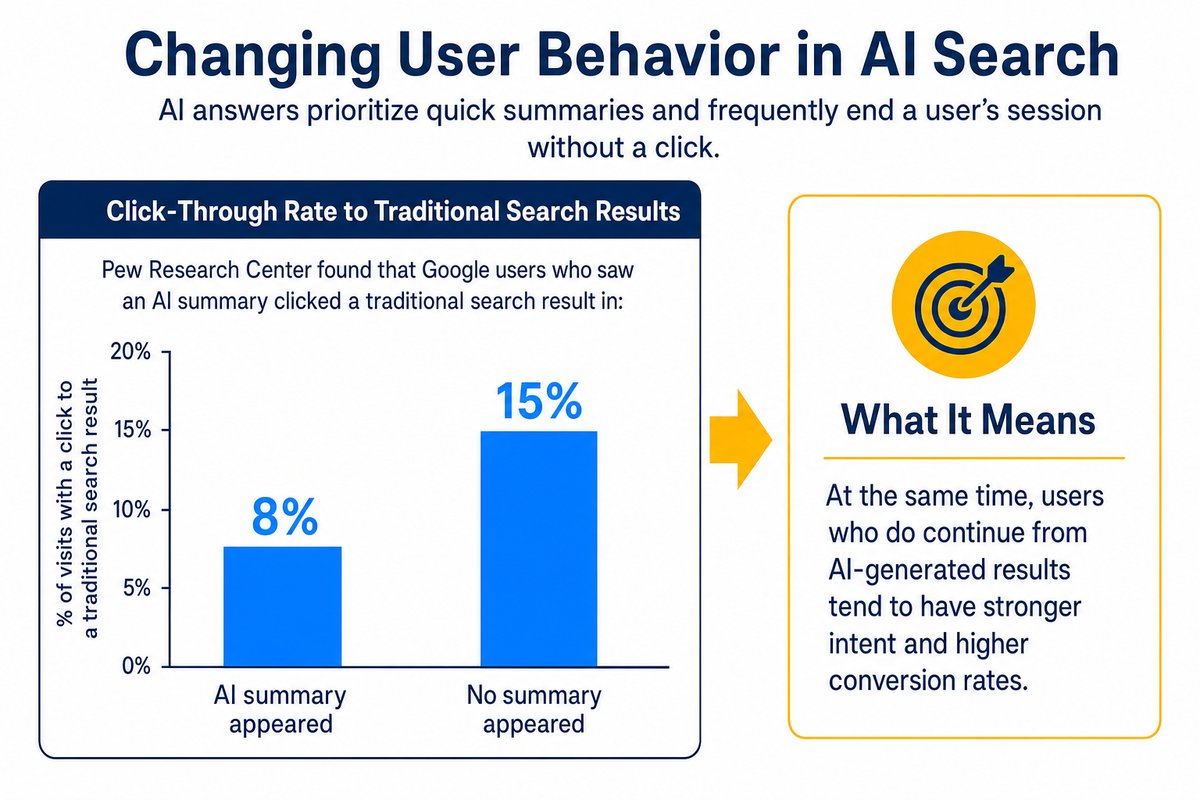
Changing User Behavior in AI Search
AI answers prioritize quick summaries and frequently end a user’s session without a click. Pew Research Center found that Google users who saw an AI summary clicked a traditional search result in 8% of visits, compared with 15% when no summary appeared. At the same time, users who do continue from AI-generated results tend to have stronger intent and higher conversion rates.
How GEO Broadens Your Visibility Strategy
Traditional SEO focused on controlling your own domain—content, technical structure, links. GEO asks you to take your visibility strategy off-site too. AI models often pull from "best of" lists, reviews, and even brand mentions in forums or news. It means that PR, earned media, and industry partnerships now impact your search footprint more directly than ever.
Our own SEO services have expanded to include brand management and third-party outreach for this reason. If you’re unsure where to start, our AI Integration Guides break down these cross-channel strategies.
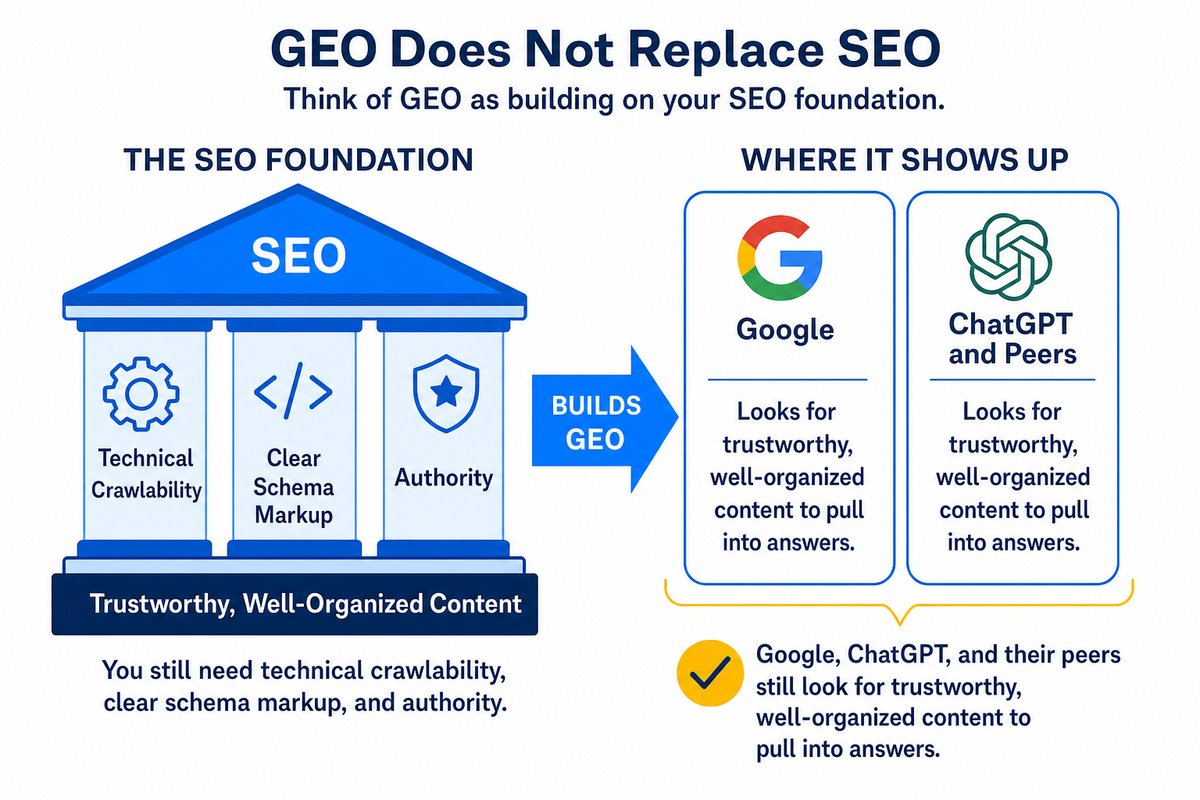
Foundations Stay the Same: SEO Isn’t Dead
GEO does not replace SEO. Think of GEO as building on your SEO foundation: you still need technical crawlability, clear schema markup, and authority. Google, ChatGPT, and their peers still look for trustworthy, well-organized content to pull into answers.
Challenges and Practical Next Steps
Measurement is harder in GEO, since citation tracking and “share of voice” tools are still new. Also, AI outputs vary widely between platforms, so results are inconsistent. The best move is to solidify your SEO basics now, then layer in off-site content and third-party visibility tactics. Bring your PR, marketing, and SEO activities together—success in AI search depends on your overall digital reputation, not just your website.
Want to explore how to future-proof your visibility and make the shift to AI-ready SEO and GEO? Start by reviewing our step-by-step SEO process or book a call with our team to get practical advice tailored to your current standing.
Conclusion
SEO vs GEO isn’t either/or—traditional SEO still gives you the search visibility you need, while GEO puts you in the frame for AI-generated answers that increasingly shape buying decisions. As search platforms change, your strategy must evolve; businesses who adapt now will see higher-quality leads even with fewer clicks. If you’re ready to build both your rankings and your reputation, it’s time to review where your business stands and what your next practical step should be.
Frequently Asked Questions
Is GEO only relevant for big brands, or can smaller businesses benefit?
GEO benefits any business that wants to be referenced in AI search answers—not just big brands. Smaller businesses that get mentioned on third-party sites, earn reviews, or become part of expert lists can win placements in AI summaries the same way as larger competitors.
Does GEO work for local businesses or just national/global ones?
GEO is just as useful for local businesses. Local review sites, directories, and community forums are often sources AI platforms use. Optimizing your local reputation makes your business more likely to be cited in AI-generated results. See our guide to Local SEO services for practical tactics.
Will AI search make SEO obsolete?
No, SEO is still the foundation. AI platforms rely on well-organized, credible websites to generate answers. GEO builds on, rather than replaces, traditional SEO practices.
How can I measure GEO success today?
There’s no single dashboard, but you can track citations, brand mentions, and inclusion in AI-generated answers by searching your key terms in AI tools. Track user journeys that started from AI-search and compare conversion rates.
Ready to Put This Into Practice?
Let's talk about where your business stands today and what to fix first.
Book a Call